
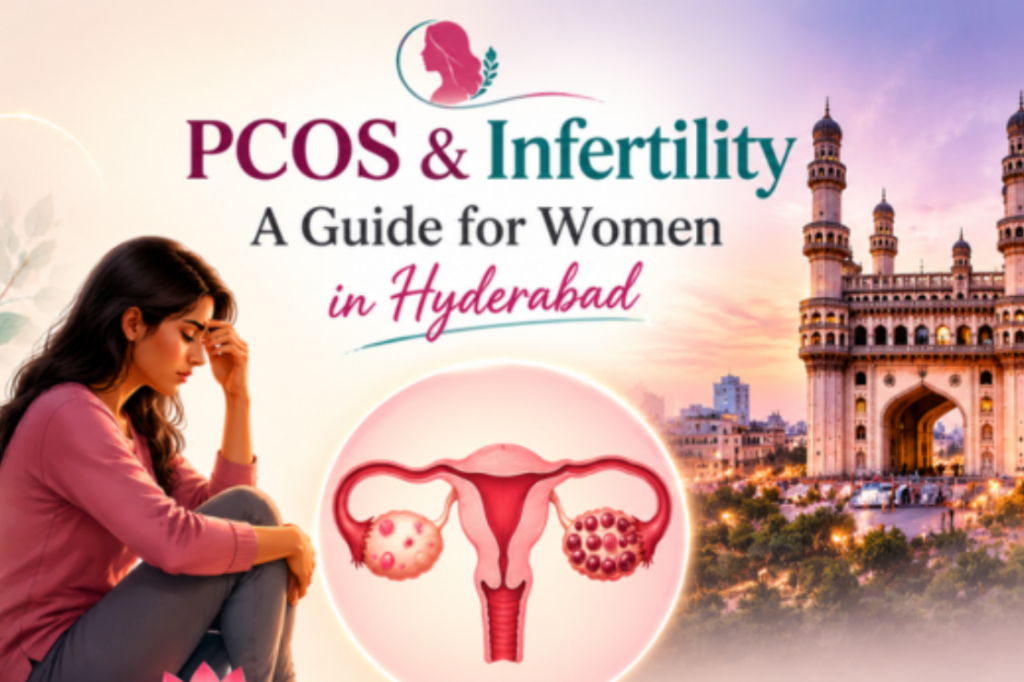
Written by Dr. Shirisha Reddy Varna — Fertility Specialist and Gynecologist, Prana Women and Fertility Hospital, Miyapur, Hyderabad
Quick answer: Yes, you can get pregnant with PCOS. PCOS is the single most common cause of female infertility in India, affecting roughly 1 in 5 South Indian women — but with the right diagnosis and treatment, between 70% and 80% of women with PCOS successfully conceive, most without needing IVF. The key is starting the right treatment early. Lifestyle changes, ovulation induction medications like letrozole, and procedures like IUI work for the majority. IVF is needed only when these don’t.
If you’ve been diagnosed with PCOS — or you suspect you have it because of irregular periods, weight gain, acne, or unwanted hair growth — this guide explains what’s actually happening in your body, why South Indian women are especially affected, and the step-by-step treatment options available in Hyderabad. Written from a fertility specialist’s chair, not a generic health article.
What Is PCOS (Polycystic Ovary Syndrome)?
PCOS — also called PCOD (Polycystic Ovarian Disease) in many Indian clinics — is a hormonal disorder in which the ovaries produce higher-than-normal levels of androgens (male hormones), disrupting the menstrual cycle and preventing regular ovulation. Without regular ovulation, getting pregnant becomes much harder.
The name is slightly misleading. The “cysts” on a PCOS ovary aren’t true cysts — they’re small immature follicles that didn’t mature and release an egg. A healthy ovary releases one mature egg each cycle. A PCOS ovary often produces many small follicles but releases none.
PCOS is diagnosed using the Rotterdam criteria, which require at least 2 of these 3 features:
- 1. Irregular or absent ovulation (irregular periods)
- 2. Clinical or biochemical signs of high androgens (acne, hirsutism, raised testosterone)
- 3. Polycystic appearance of ovaries on ultrasound
Why Is PCOS So Common Among Women in Hyderabad and South India?
Studies place PCOS prevalence in South Indian women at **18–22%** — among the highest in the country. Several factors converge:
Genetic predisposition
South Asian populations have a higher genetic susceptibility to insulin resistance, the metabolic root of most PCOS cases.
Dietary patterns
Modern urban diets rich in refined carbohydrates (white rice, biryani, sweets, processed snacks) drive insulin spikes.
Sedentary lifestyle
IT, BPO, and corporate jobs across Hyderabad’s HITEC City, Gachibowli, and Madhapur involve long sedentary hours.
Stress and sleep deprivation
Both elevate cortisol, which worsens insulin resistance.
Vitamin D deficiency
Despite Hyderabad’s sun, indoor lifestyles mean most women are vitamin D deficient — a documented PCOS risk factor.
Recognising the local context matters because PCOS treatment that ignores diet and lifestyle culturally fails. We’ll come back to this.
How PCOS Affects Fertility
PCOS interferes with fertility in three connected ways:
Anovulation (No Egg Release)
If you’re not ovulating regularly, you cannot conceive naturally most months. Women with PCOS may go 45, 60, or even 90 days between periods — and many of those cycles are anovulatory (no egg released).
Hormonal Imbalance
Elevated LH (luteinising hormone) and androgens disrupt egg quality. Even when ovulation does occur, the egg released may be of poorer quality.
Insulin Resistance
About 70% of women with PCOS have insulin resistance, which independently impairs fertility and increases the risk of miscarriage and gestational diabetes once pregnancy is achieved. The good news: each of these is treatable.
Symptoms of PCOS Most Women Ignore
Many women in their 20s assume their symptoms are “normal” until they try to get pregnant. Common signs that should prompt evaluation:
- Irregular periods — cycles longer than 35 days or fewer than 8 periods per year
- Heavy or scanty bleeding when periods do come
- Acne that persists into your late 20s and beyond
- Hirsutism — unwanted hair growth on the chin, upper lip, chest, or stomach
- Hair thinning on the scalp (androgenic alopecia)
- Difficulty losing weight despite diet and exercise
- Weight gain around the abdomen
- Dark velvety patches of skin on the neck, armpits, or groin (acanthosis nigricans — a sign of insulin resistance)
- Mood swings, anxiety, or depression — increasingly recognised as part of the PCOS picture
- Trouble conceiving after 6–12 months of trying
If 3 or more of these resonate, it’s worth getting evaluated. PCOS diagnosed early is far easier to manage than PCOS diagnosed after years of complications.
How PCOS Is Diagnosed
A complete PCOS workup at Prana Women and Fertility Hospital includes:
- Detailed menstrual and lifestyle history
- Pelvic examination
- Transvaginal ultrasound to assess ovarian morphology and antral follicle count
- Hormone panel: FSH, LH, AMH, total testosterone, DHEAS, prolactin, TSH, free T4
- Metabolic workup: fasting blood sugar, fasting insulin, HOMA-IR, lipid profile, HbA1c
- Vitamin D and B12 levels
A single test does not diagnose PCOS. The picture comes from combining clinical signs, ultrasound, and labs. Beware clinics that diagnose PCOS based on a single ultrasound — many women have polycystic-looking ovaries without having the syndrome.
Treatment Options to Get Pregnant with PCOS
Treatment is layered. Most women in Hyderabad don’t need IVF — they need the right step-by-step approach.
Step 1: Lifestyle Modification (First-Line, Always)
This is not optional and not “just diet advice.” Losing even 5–10% of body weight restores ovulation in many women with PCOS. Practical changes that work in the Hyderabad context:
- Reduce refined carbohydrates — switch from white rice to millets, brown rice, or smaller portions of rice with more vegetables and protein
- Eat protein with every meal (eggs, dal, paneer, chicken, fish)
- Avoid sugary chai and bakery items as routine
- Walk 30–45 minutes daily — even split into 3 sessions of 10–15 minutes
- Add resistance training twice a week — this directly improves insulin sensitivity
- Sleep 7–8 hours; prioritise this over late-night screen time
- Address vitamin D deficiency if present
Step 2: Medical Management
If lifestyle alone doesn’t restore ovulation in 3–6 months, or if there’s urgency due to age, medication is added:
- Metformin — improves insulin sensitivity and helps restore ovulation in insulin-resistant women
- Inositol (Myo + D-chiro inositol) — emerging evidence-based supplement that improves ovulation
- Letrozole — now the first-line ovulation induction drug for PCOS (preferred over the older clomiphene)
- Clomiphene citrate — still used in select cases
- Gonadotropin injections — if oral medications don’t work, low-dose injections can induce ovulation
Step 3: IUI (Intrauterine Insemination)
If ovulation is restored but pregnancy doesn’t occur in 3–6 cycles, IUI is the next step. IUI improves the odds by placing prepared sperm directly into the uterus at the time of ovulation. Success rates per cycle are 12–18% for PCOS patients under 35.
Step 4: IVF
IVF is considered when:
- Multiple IUI cycles have failed
- The woman is over 35 with diminished egg reserve
- There’s a co-existing factor (tubal damage, severe male factor, endometriosis)
- The couple chooses to move directly to IVF for time reasons
For PCOS patients, IVF success rates are actually higher than average because the ovaries respond well to stimulation — though the protocol must be carefully managed to avoid Ovarian Hyperstimulation Syndrome (OHSS). [Learn more about our fertility treatments here.] https://pranawomenandfertility.com/fertility-treatments/
Step 5: Laparoscopic Ovarian Drilling (Rare, Specific Cases)
For very specific PCOS patients who don’t respond to medications, a minor laparoscopic procedure can restore ovulation. This is rarely needed today.
What Are the Pregnancy Risks for Women with PCOS?
Women with PCOS who conceive are at slightly higher risk of:
- Miscarriage (especially in the first trimester)
- Gestational diabetes
- Pregnancy-induced hypertension and preeclampsia
- Preterm birth
These risks can be largely managed with early antenatal care, blood sugar monitoring, and metformin continuation in some cases. A PCOS pregnancy isn’t a high-risk pregnancy by default — but it needs a knowledgeable obstetrician.
When Should You See a Fertility Specialist for PCOS?
See a fertility specialist if:
- You have known PCOS and have been trying for 6 months without success
- You have irregular periods (cycles longer than 35 days) and have been trying to conceive
- You’re 35 or older and have been trying for 3 months
- You’ve had any miscarriage with PCOS
- You’re on PCOS medications and want to start trying to conceive
PCOS treatment for fertility is different from PCOS treatment for symptom management. The medications, timing, and goals shift completely. A fertility specialist plans your treatment around getting you pregnant — not just regulating your cycle.
Start Your PCOS Journey With the Right Specialist
PCOS is one of the most treatable causes of infertility — but only if it’s treated correctly. Many women lose years on the wrong protocol, the wrong medication, or no real plan at all.
At Prana Women and Fertility Hospital, Miyapur, we offer complete PCOS evaluation and fertility planning under one roof — hormonal workup, ultrasound, metabolic assessment, dietary guidance, and a personalised plan whether you want to conceive now or later. Call (+91) 98858 51333 or book an appointment : https://pranawomenandfertility.com/#contact_us
About the Author
Dr. Shirisha Reddy Varna is a Gynecologist and Fertility Specialist at Prana Women and Fertility Hospital, Miyapur, Hyderabad. She holds an MBBS, MS (OBGY), FRM, FAMS, MRCOG-1 (UK), DCU (Kiel, Germany), and a Fellowship in Infertility. She has helped thousands of women across Hyderabad manage PCOS and achieve pregnancy.
Frequently Asked Questions
Yes. Many women with PCOS conceive naturally, especially with lifestyle modification and weight management. About 70–80% of women with PCOS achieve pregnancy with appropriate treatment, and a meaningful proportion do so without medication.
The terms are used interchangeably in India, though strictly speaking PCOS is the full syndrome with metabolic and hormonal features, while PCOD often refers more loosely to the ovarian appearance alone. Treatment approach is similar.
Most women with PCOS who respond to lifestyle and ovulation induction conceive within 6–12 months of starting treatment. Those who need IUI or IVF may take slightly longer depending on the protocol and response.
No, PCOS is a lifelong condition, but symptoms and metabolic risks can be significantly reduced with sustained lifestyle changes. Many women find that pregnancy itself improves their cycles temporarily.
A low-glycemic-index diet built around traditional Indian foods works best: millets (ragi, jowar, bajra) instead of refined rice and wheat, plenty of vegetables, adequate protein at every meal, healthy fats from nuts and seeds, and elimination of sugary drinks and processed snacks. No single PCOS diet fits everyone — personalised guidance from a fertility-aware dietitian helps.
PCOS patients generally have excellent IVF success rates because their ovaries respond strongly to stimulation. The protocol must be carefully managed to avoid OHSS (Ovarian Hyperstimulation Syndrome), which is more common in PCOS. With experienced clinical management, IVF success rates for PCOS patients under 35 exceed 50% per cycle.
Prana Women and Fertility Hospital in Miyapur offers complete PCOS evaluation and fertility treatment, including hormonal assessment, ovulation induction, IUI, and IVF, under Dr. Shirisha Reddy Varna. Call (+91) 98858 51333 to book a consultation.