
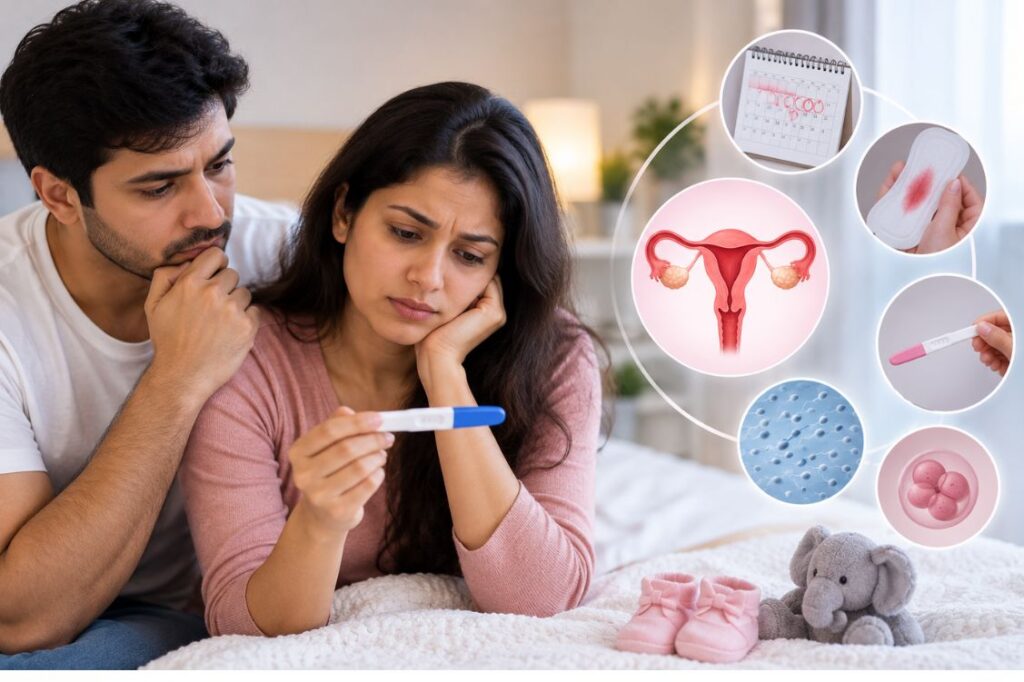
Infertility is often invisible until it isn’t — many of the underlying causes produce no dramatic symptoms at all, which is part of why the standard advice is simply “try for a year, then get checked.” But there are patterns worth paying attention to well before that timeline, and knowing them can mean getting help earlier rather than later.
The General Timeline Guideline, and Its Limits
The standard guidance is that couples under 35 should seek evaluation after twelve months of regular, unprotected intercourse without conceiving, and couples where the woman is 35 or older should seek evaluation after six months, given the more limited time window. This guideline is useful, but it’s a general rule, not a reason to ignore specific warning signs that warrant earlier evaluation regardless of how long you’ve been trying.
Menstrual Cycle Irregularities Worth Noting
Very irregular or absent periods: Cycles that vary dramatically in length, or periods that stop altogether outside of pregnancy, often indicate an ovulation problem — one of the more common and identifiable causes of infertility.
Extremely heavy or painful periods: While period pain to some degree is common, periods severe enough to disrupt daily activities, or accompanied by heavy bleeding, can indicate conditions like endometriosis or fibroids, both of which can affect fertility.
Very short or very long cycles: Cycles consistently shorter than 21 days or longer than 35 days can indicate ovulation isn’t occurring predictably, which directly affects the ability to conceive on a natural timeline.
Physical Symptoms Beyond the Menstrual Cycle
Pelvic pain outside of menstruation: Ongoing pelvic pain, particularly during intercourse or at times unrelated to your period, can be a sign of endometriosis, pelvic inflammatory disease, or other conditions relevant to fertility.
Signs of hormonal imbalance: Unexplained weight changes, excess hair growth, acne, or hair thinning can indicate conditions like PCOS or thyroid dysfunction, both linked to fertility difficulty.
A history of pelvic infections or surgery: Previous infections, particularly sexually transmitted infections, or prior abdominal or pelvic surgery, raise the likelihood of scar tissue affecting the fallopian tubes.
Signs Relevant Specifically to Male Partners
Testicular pain, swelling, or a history of testicular issues: A history of undescended testicles, testicular injury, or conditions like varicocele are all relevant to sperm production and worth mentioning during an evaluation.
Changes in sexual function: Difficulty with erections or ejaculation isn’t just a quality-of-life issue — it’s directly relevant to the ability to conceive and worth discussing rather than working around silently.
A history of certain medical treatments: Previous chemotherapy, radiation, or certain long-term medications can affect sperm production and are important context for a fertility evaluation.
Patterns That Warrant Earlier Evaluation, Regardless of Timeline
Some signs are worth acting on before the standard six- or twelve-month waiting period, specifically:
- A known diagnosis already affecting fertility — endometriosis, PCOS, a prior sexually transmitted infection, or a partner’s known low sperm count
- Two or more prior miscarriages
- Irregular or absent periods, which make timing natural conception genuinely difficult regardless of how long you’ve been trying
- Either partner being significantly older, where time itself is a more pressing factor
- A prior diagnosis of a condition affecting the reproductive organs in either partner
Why “No Obvious Symptoms” Doesn’t Rule Out a Fertility Issue
It’s worth being direct about this: many causes of infertility, particularly mild endometriosis, unexplained infertility, and some cases of reduced ovarian reserve, produce no noticeable symptoms at all. This is exactly why the general timeline guideline exists — it accounts for the fact that absence of symptoms isn’t the same as absence of an issue, and a proper evaluation is the only reliable way to know for couples without any specific warning sign.
What a Fertility Evaluation Actually Involves
A thorough initial evaluation typically includes a detailed history from both partners, hormone testing for the female partner, a semen analysis for the male partner, and imaging (usually ultrasound, sometimes an HSG to check the fallopian tubes) as needed. This gives a comprehensive starting picture rather than guessing based on symptoms alone.
Deciding When to Seek Help
If you recognize any of the specific warning signs above, it’s reasonable to seek an evaluation without waiting for the standard timeline to pass. If you don’t have specific symptoms but have been trying for the general guideline period without success, that itself is the signal — not a symptom you’re missing, but simply time passing without success, which is meaningful information on its own.
Frequently Asked Question
Yes — regular periods indicate regular ovulation is likely, but don’t rule out other causes of infertility, including tubal factors, unexplained infertility, or male-factor issues.
Occasional irregular cycles, particularly around stress, illness, or significant life changes, are common and don’t necessarily indicate an underlying fertility issue. Persistent, ongoing irregularity is what’s more specifically worth evaluating.
Both partners should be evaluated, since male-factor infertility contributes to roughly a third of infertility cases, and a full picture requires assessing both partners rather than focusing on one.
Yes — for women 35 and older, the standard guideline itself shortens to six months specifically because age is a meaningful factor on its own, independent of any other symptom.