
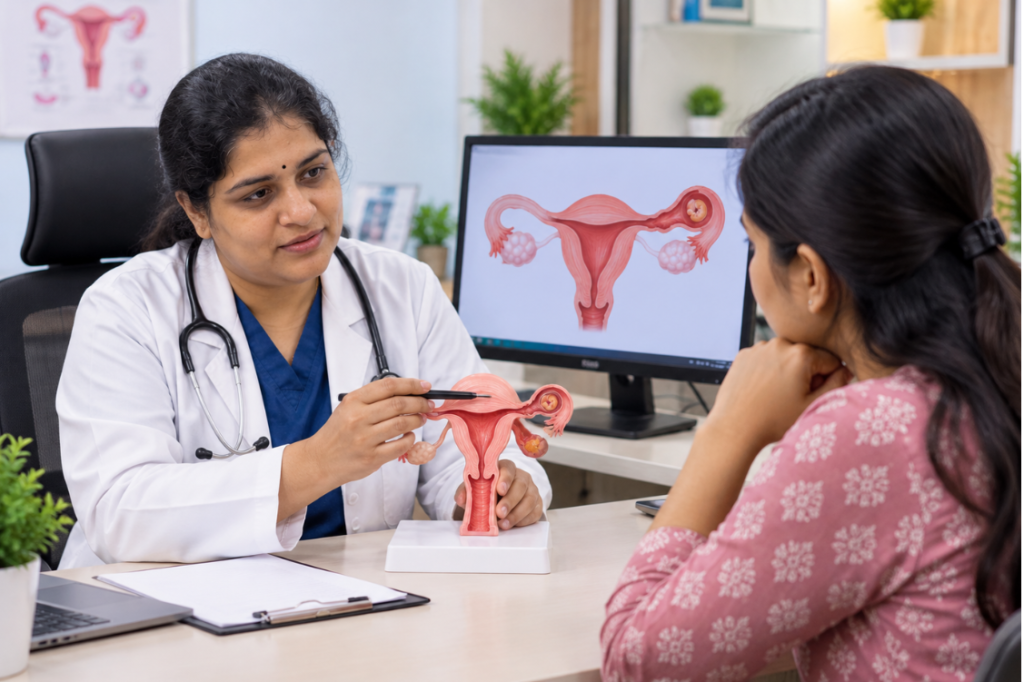
An ectopic pregnancy is one of the more urgent situations in early pregnancy care, precisely because it isn’t something that can be managed by waiting and watching. Recognizing the warning signs early — and understanding what it actually means afterward — matters both for immediate safety and for making sense of future family planning.
What an Ectopic Pregnancy Actually Is
An ectopic pregnancy occurs when a fertilized egg implants somewhere outside the uterus, most commonly within a fallopian tube, though rarely in other locations like the ovary or abdominal cavity. Because these locations can’t support a developing pregnancy the way the uterus can, an ectopic pregnancy cannot continue safely and requires medical treatment — it is never a pregnancy that can be carried to term.
Why It’s a Medical Emergency, Not Just a Complication
As an ectopic pregnancy grows, it risks rupturing the fallopian tube or other affected structure, which can cause serious internal bleeding — a genuinely life-threatening situation if not treated promptly. This is precisely why ectopic pregnancy is treated with urgency rather than a wait-and-see approach once suspected.
Early Warning Signs Worth Knowing
Abdominal or pelvic pain, often one-sided: Pain concentrated on one side of the lower abdomen is a common early sign, though it can sometimes be more general.
Vaginal bleeding that differs from a normal period: This can be lighter or heavier than usual, and sometimes darker or more watery in appearance.
Shoulder tip pain: This specific, somewhat unusual symptom — pain at the tip of the shoulder — can occur if internal bleeding is irritating the diaphragm, and is a sign that shouldn’t be dismissed as unrelated to a pregnancy concern.
Dizziness, fainting, or feeling unusually faint: These can indicate significant internal bleeding and warrant emergency attention immediately, not a wait-and-see approach.
Signs of early pregnancy alongside these symptoms: A positive pregnancy test combined with any of the above symptoms should prompt immediate medical evaluation, since early ectopic pregnancy can otherwise resemble a normal early pregnancy.
Who Is at Higher Risk
Certain factors increase the likelihood of ectopic pregnancy, and being aware of them can prompt earlier vigilance:
- A previous ectopic pregnancy
- Prior pelvic inflammatory disease or sexually transmitted infections affecting the fallopian tubes
- Previous tubal surgery, including tubal ligation or reversal
- Conception through IVF, which carries a modestly increased risk compared to natural conception
- Smoking
- Use of an intrauterine device (IUD) at the time of conception, though pregnancy itself is rare with an IUD in place
How It’s Actually Diagnosed
Diagnosis typically combines a blood test measuring hCG (the pregnancy hormone) levels — which often rise more slowly than expected in ectopic pregnancy — with a transvaginal ultrasound to check for the pregnancy’s location. In early cases, this sometimes requires monitoring hCG levels over a few days alongside repeat ultrasounds, since a very early ectopic pregnancy isn’t always immediately visible on a single scan.
How It’s Treated
Medication: For an ectopic pregnancy caught early, before significant growth or rupture, medication (commonly methotrexate) can be used to stop the pregnancy from progressing, avoiding the need for surgery.
Surgery: For more advanced cases, or when rupture has occurred or is imminent, surgical removal of the ectopic pregnancy is necessary, sometimes requiring removal of the affected fallopian tube depending on the extent of damage.
What It Means for Future Fertility
This is often the most pressing question once the immediate emergency has passed, and the honest answer is genuinely reassuring for most women: having one ectopic pregnancy doesn’t mean future pregnancies will automatically be ectopic, and many women go on to have successful pregnancies afterward. That said, having one ectopic pregnancy does somewhat increase the risk of another, which is why early monitoring in a subsequent pregnancy is generally recommended. If a fallopian tube was removed, natural conception is still possible using the remaining tube, and IVF — which bypasses the tubes entirely — remains a fully viable option if needed.
What to Do If You Suspect an Ectopic Pregnancy
Given the emergency nature of this condition, any combination of a positive pregnancy test with concerning symptoms — one-sided pain, unusual bleeding, shoulder tip pain, dizziness — warrants immediate medical attention rather than waiting to see if symptoms pass. This isn’t a situation where a cautious wait-and-see approach is the safer choice.
Frequently Asked Question
No, there is no procedure to relocate an ectopic pregnancy into the uterus. Because it cannot develop safely outside the uterus, treatment focuses on safely ending the pregnancy rather than attempting to relocate it.
This depends on the treatment received — surgical cases and methotrexate treatment both require a waiting period, generally a few months, to allow proper healing and, for methotrexate, for the medication to clear the body. Your specialist will give a specific timeline based on your treatment.
Not necessarily. Many women with a history of ectopic pregnancy go on to conceive naturally without further issues, though the specific circumstances (particularly any underlying tubal damage) are worth discussing with your specialist.
Yes, though it’s less common than with natural conception, since embryos are placed directly into the uterus. It can still occur if an embryo migrates into a fallopian tube after transfer, which is why early monitoring after IVF is standard practice.